 FINDIE
Eight brains. One grove.
Claude, Codex, Gemini, Cursor, Copilot, OpenCode, GLM, MiniMax: one root system. Route every card to the model it deserves; budgets meter the sap.
your cursor is the light
hold anywhere · force the bloom
Every card picks its own branch: Opus for the hard one, Haiku for the chore, Codex when you feel like it.
Different brains,
same discipline.
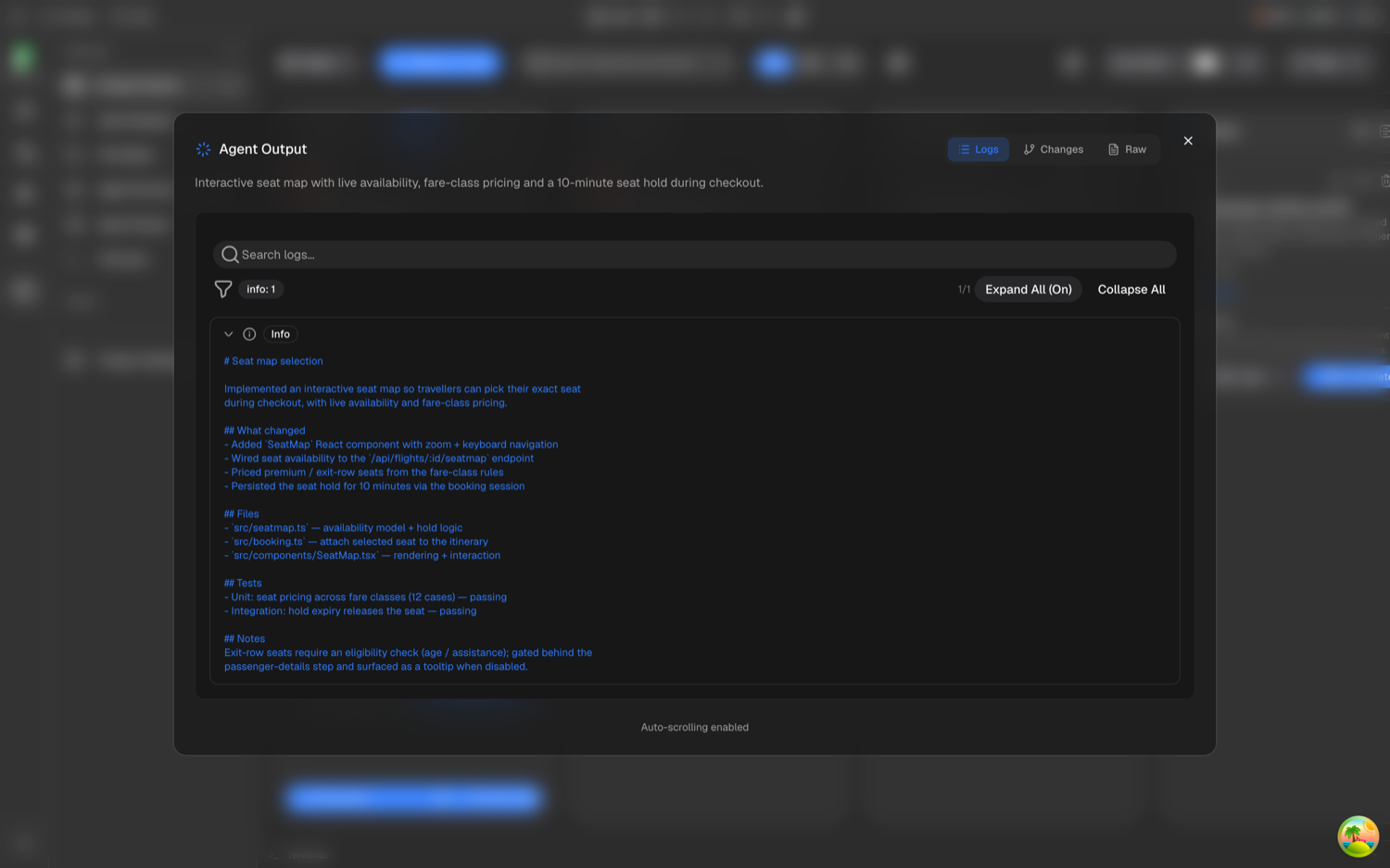
Whatever model builds the card, the engine is identical: isolated worktree, serialized queue, fast-forward only. This is a real run.
Route per card
the model is a property of the task, not of the product. mix freely on one board.
Budgets meter the sap
per-task dollar caps, metered live per token. an agent over its cap stops on the spot.
One queue for all
whoever wrote the code, it lands the same way: rebase, revalidate, squash, ff.
Bring your own keys
your subscriptions, your api keys, sealed in the local vault. no middleman markup.
No lock-in
pass-through ids welcome: glm, minimax, openrouter. swap brains without repotting.
The model is a choice.
The discipline is not.
Pick a brain per task. The board doesn't care; the queue treats them all the same.
Cost caps are enforced mid-run, not reported after. Nothing spends in the dark.
New model tomorrow? Change one field on the card. The grove grows around it.
nasıl yapıldı? → rehber (tr)